Journal · · updated · 4 min read
Maritime terroir: does the sea give a sardine its flavour?
Terroir at sea is a useful analogy, not a law. A sardine's flavour depends on its season and fat, its food, its size, how fast it is canned, the cannery's method and oil, and time in the tin. The coast matters, but fish move and the cannery's hand matters as much.
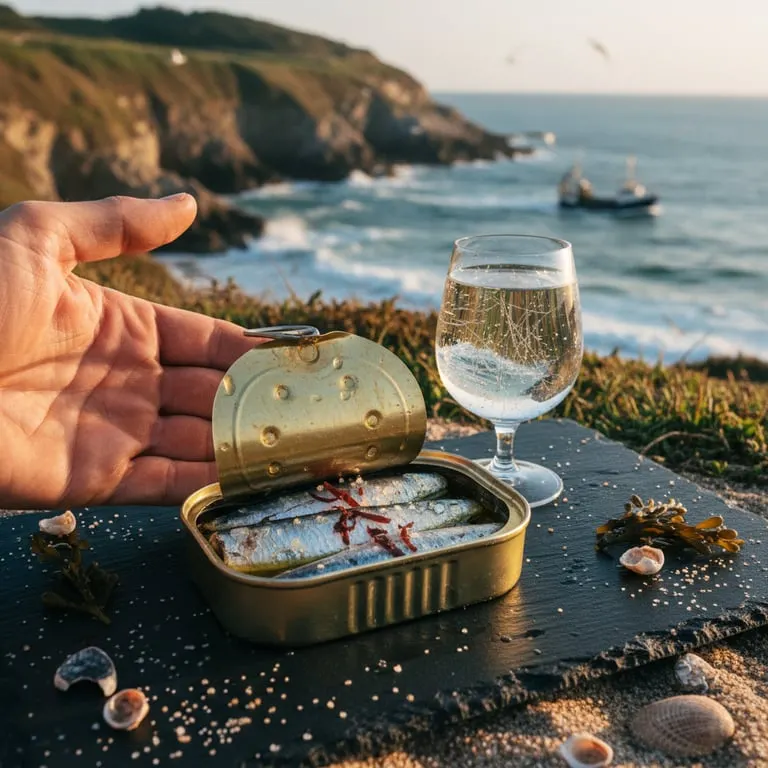
Terroir is a wine word. It describes how a place, its soil, slope and climate, shows in the taste of what grows there. Applied to the sea, the idea is appealing: a sardine from one coast tasting different from a sardine from another, the way a Chablis differs from a Sancerre. Is there anything in it?
There is something, though less than the romance suggests. The useful exercise is to list what really shapes the taste of a tinned sardine, and then see where the sea fits.
What a sardine eats and when
The European sardine, Sardina pilchardus, lives in shoals in the open water and feeds on plankton. Its condition follows the seasons. After spawning it is lean; through summer and autumn, when food is plentiful, it builds up fat. That fat carries much of the flavour and gives the soft, rich texture that suits canning and ageing.
This is the strongest part of the terroir argument. The same species, in the same waters, tastes quite different from one month to the next. That is why canneries work in season, and why a vintage tin starts with a well-fed fish. Some houses say so directly: La Perle des Dieux describes the sardines of one of its 2020 vintages as above 12% fat.
Water, temperature and plankton
What the fish eats depends on the water. Temperature, currents and nutrients decide which plankton thrive, and when. In warm years the balance can shift, and French fisheries scientists have reported for some years that sardines in the Bay of Biscay are smaller and leaner than they used to be. The causes are still studied, and food is one of the main suspects. Our article on the Atlantic heatwave looks at the recent record temperatures.
So the sea does leave a mark. But it is a mark of season and year as much as of place.
Size and handling
Two less romantic factors matter a great deal:
- Size. Small sardines and large ones behave differently in the tin. Small fish are generally found to soften sooner and turn delicate; larger ones tend to keep more body for longer.
- Freshness. A sardine starts to lose quality as soon as it leaves the water. Canneries that care about this say how quickly they work. La Quiberonnaise, for example, states on its own site that its sardines are prepared and packed by hand within 48 hours of being caught.
The cannery's hand
This is where the wine analogy shows its limits. In wine, the place speaks through the grape. In a tin, the cannery speaks loudly too:
- The method. Fish may be salted, gutted, dried, fried or cooked before canning, and each house has its way. A Jean Burel tin from Concarneau describes sardines salted, gutted, fried and covered in olive oil by hand, "the old way".
- The oil. Extra virgin olive oil is usual for tins meant to be kept, but oils differ, and the oil becomes part of the taste over the years.
- The care. Trimming, placing the fish, sealing the tin: small gestures that change the result.
Time in the tin
The last factor is time. A vintage sardine changes slowly in its oil: the flesh softens, the bones become tender, the flavour grows rounder. After a few years, the influence of the tin and the oil can be as strong as that of the sea. Our article on the ten-year-old sardine looks at how far that goes.
Coasts and ports
French sardines are mostly fished in the Bay of Biscay and off southern Brittany, often with a purse seine, known locally as the bolinche. They are canned in ports with long histories: Douarnenez, Concarneau and Penmarc'h in Finistère, Quiberon in Morbihan, Saint-Gilles-Croix-de-Vie in the Vendée.
A port on a tin tells you where the fish was canned. It does not always tell you exactly where it was caught: shoals move, and canneries buy fish landed in different harbours. That is another difference from a vineyard, which stays where it is.
A fair conclusion
Is there a maritime terroir? In a loose sense, yes: season, water and food shape a sardine's fat and taste, and a coast with its own fishing and canning traditions does leave a recognisable style. In a strict sense, no: fish move, years differ, and the cannery's hand and time in the tin weigh at least as much as the place.
The best way to explore it is to taste. Open two tins of the same year from two different houses, or two years from the same house, and see which differences you notice. Our comparison of Douarnenez and Saint-Gilles-Croix-de-Vie is a good place to start, and our article on fishing methods explains how the fish reach the cannery.
The collection presented on this site gathers tins from seven canneries between Douarnenez and Saint-Gilles-Croix-de-Vie, from 2016 to 2022, each listed by house and year in the register.
From the collection
Marianne Larvol · 5 tins · Shelf I
Gilbert Shelton · 10 tins · Shelf I