Journal · · updated · 5 min read
Fat content: why the season matters more than the date for a vintage sardine
A vintage sardine ages well only if it went into the tin rich in fat. Sardines build fat over summer and spend it on spawning, so makers choose fish from the best part of the season, not a fixed date.
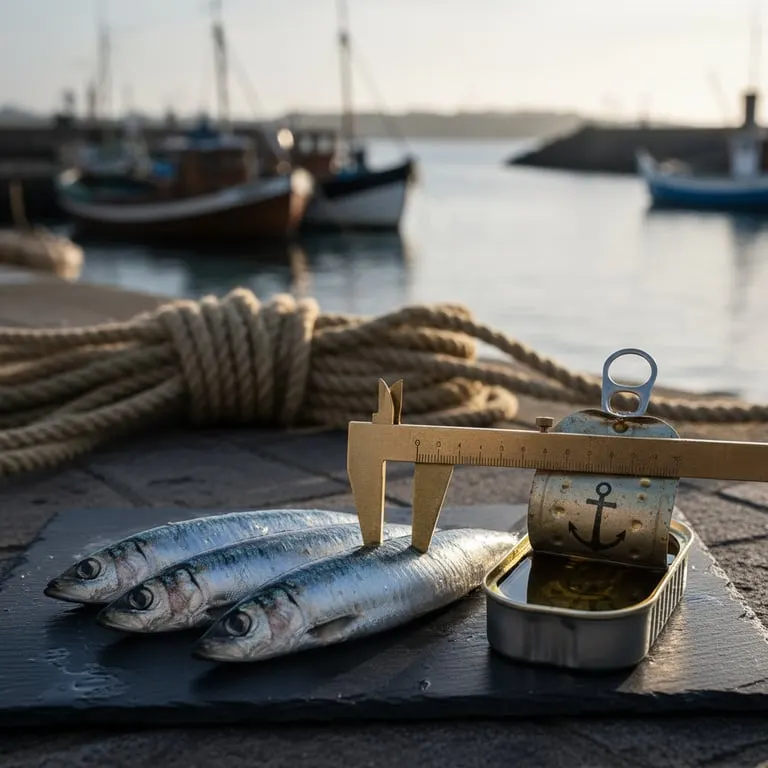
A vintage sardine is a sardine canned in one season and sold with that year on the tin. The idea, borrowed loosely from wine, is that the fish will go on changing for several years after canning: the flesh softens, fish and oil exchange flavour, and the sharper edges of a young tin round off. Not every sardine can do this well. When makers explain what they look for, one quality comes up again and again: fat.
Why fat matters in a tin made for keeping
A lean sardine canned in olive oil stays, broadly, a lean sardine. Its flesh is firm, sometimes a little dry, and time mostly makes it softer and saltier. A rich sardine has something to give. The fat in its flesh and under its skin mixes slowly with the oil around it, and that exchange is where the moist, almost confit texture of an older tin comes from.
Fat also carries flavour. Most of the aromatic compounds that make a sardine taste of sardine sit in or dissolve into fat, which is why the oil in a well-kept tin tastes so much of the fish. A lean fish gives less to the oil and has less to lose before it turns dull.
This has not been measured tin by tin in any widely published study. It is what makers say, and what anyone who has opened a lean and a rich vintage side by side will recognise.
How a sardine's fat changes through the year
The European sardine, Sardina pilchardus, is not equally rich all year round. Like other small oily fish, it builds reserves when plankton is plentiful and spends them on spawning. On the Atlantic coast of France this broadly means:
- fish are leaner in winter and spring, around and after spawning;
- they fatten through the summer as they feed;
- they are usually at their richest from late summer into autumn.
The timing shifts from one year to the next and from one stretch of coast to another, with water temperature and the amount of food in the sea. That is one reason no two vintages are the same, and why the place and the season matter as much as the label. The sea side of this is the subject of what maritime terroir means for a sardine.
Why makers choose a window, not a date
The end of a sardine season is not a single day decided by the weather. Boats stop when the fish move away, when the sea turns, when the market changes. For a cannery making dated tins, there is one more test: is the fish still good enough to keep?
The houses that make vintage sardines describe their choice in similar words:
- La Perle des Dieux, at Saint-Gilles-Croix-de-Vie in Vendée, says it has packed vintage sardines every summer since 2004, from fish caught at the best time of the season and packed fresh.
- Connétable, at Douarnenez, says its dated tins are fished at the best period of the season and packed by hand.
- La Quiberonnaise says it respects the fishing seasons and buys as close to the Quiberon coast as it can.
La Perle des Dieux is the most precise. For its 2020 vintage it describes sardines above 12% fat, made to keep for up to ten years if the tins are turned regularly. For its 2021 Grand Nicolas tin it suggests waiting three to four years before opening. These are the maker's own figures and advice, not a rule for every tin, but they show how directly fat and keeping are linked in a cannery's mind.
What fat does over the years
Once the tin is sealed and sterilised, nothing new goes in. What changes is the balance between what is already there:
- The first year or two. The fish is firm, the flavour bright and clearly marine, the oil still tastes of olive oil. A lean fish and a rich one can look much alike at this stage.
- After three to five years. In a rich fish the flesh softens and turns moist right through. The oil takes on the taste of the sardine. Bones, already softened by sterilisation, become softer still.
- Beyond that. A rich fish can go on gaining depth and a buttery texture. A lean one tends to flatten: softer, but no more interesting.
That last point is the practical one. Time cannot add what the fish never had. If a tin was filled with lean fish, keeping it longer is unlikely to make it better.
How to tell a rich tin from the outside
You cannot measure fat through a sealed tin, but a few signs help:
- A year printed on the tin, and the word millésime or millésimée. A maker who dates a tin is telling you it was chosen for keeping.
- The maker's own advice. Some say how long to wait or how often to turn the tins. That advice usually reflects what they know about that season's fish.
- The oil. Extra virgin olive oil is the usual choice for tins meant to age.
- The house. Houses that make a vintage every year tend to be strict about the fish they accept for it.
Once opened, the difference is plain. A rich sardine is glossy, moist to the centre and leaves a fine film of fat in the oil. A lean one flakes, looks matt and tastes mostly of salt and oil.
A word on nutrition
Sardines are an oily fish and a well-known source of omega-3 fatty acids. A fatter sardine simply carries more of those fats. That is a fact about the fish, not a reason to keep a tin longer: what changes with time is taste and texture.
In short
A great vintage starts at sea, months before the tin is sealed. The date on the lid tells you when the fish was canned; the season tells you whether it was worth keeping. If you want to see how makers turn that choice into tins, the collection presented on this site lists dated tins from seven Breton and Vendée canneries, from 2016 to 2022. For what happens after a decade, read the ten-year-old sardine.
From the collection
Chiporev · 2 tins · Shelf I
Gilbert Shelton · 10 tins · Shelf I
Marianne Larvol · 5 tins · Shelf I