Journal · · updated · 4 min read
Cooking sardines or tasting sardines: knowing which tin is which
Everyday and recipe tins are made to be cooked with or eaten soon; vintage tins in plain olive oil are made to be kept and tasted on their own. Read the year, the oil and the maker's advice, taste a vintage plain first, and cook with the rest.
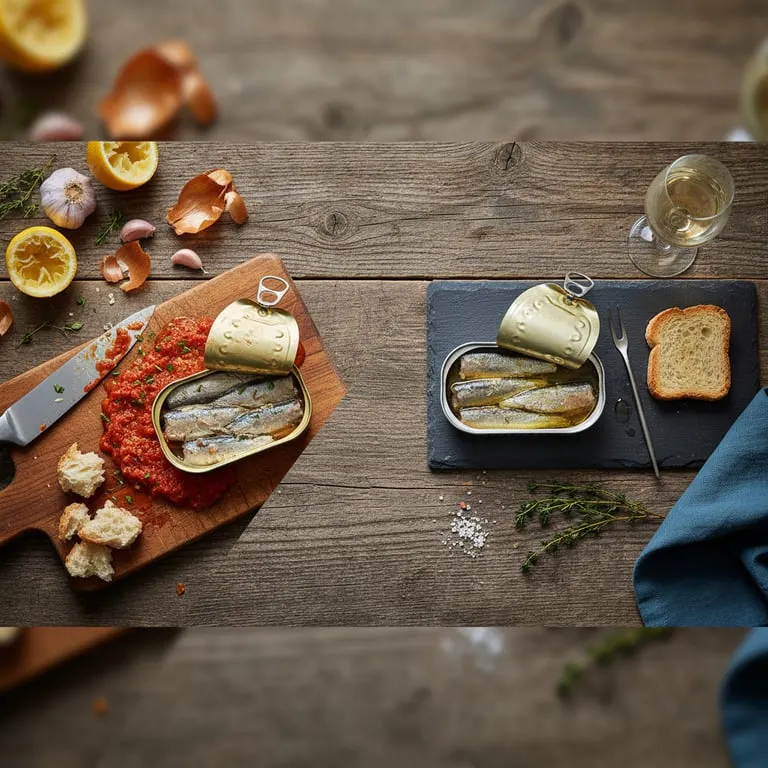
Tinned sardines are back in fashion. They appear in pasta, on toast, in salads and in spreads, and food writers have rediscovered how good a simple tin can be. That is excellent news. It does raise one practical question: are all tins meant to be used the same way? Not quite. Some are made to cook with, and some are made to be tasted on their own. Knowing which is which saves you from wasting either.
Two kinds of tin
Cooking sardines
These are the everyday tins: sardines in olive oil, sunflower oil or water from well-known brands, sold everywhere. In France, Connétable, whose tins are in most supermarkets, is the name many people grew up with. They are reliable, firm and well seasoned, and they hold up when mashed, mixed or warmed.
Recipe tins belong here too. Canneries make sardines with tomato, lemon, chilli, herbs, spices or butter. Hénaff, for example, sells sardines in churned butter presented as a dish to be eaten warm. These tins are designed to be eaten as they are or used in a dish, within their best-before date.
Tasting sardines
These are vintage sardines, sardines millésimées: fish canned in season, usually in plain olive oil, dated by year and intended to be kept. Over time the flesh softens, the bones become tender, and the flavour grows rounder. What you pay for, and wait for, is that slow change.
A tasting sardine is best eaten with very little around it: on bread, perhaps with butter, a few drops of lemon if you like. Strong sauces hide exactly what makes it different.
How to tell them apart on the label
| On the tin | Probably for cooking | Probably for tasting |
|---|---|---|
| Year printed | No, or only a best-before date | Yes, a vintage year |
| Contents | Sauce, flavourings, or a neutral oil | Plain olive oil, little else |
| Wording | Recipe name, "to eat warm", serving ideas | Millésime, keeping advice, "turn the tin" |
| Maker's advice | Eat before the best-before date | Wait, sometimes several years |
| Price | Everyday | Higher, though price alone proves nothing |
Many houses make both kinds. La Belle-Iloise, for instance, makes plain vintage tins and a large range of flavoured recipes. The collection presented on this site reflects the same split: its Lot III is a set of 2021 Belle-Iloise recipe tins, from lemon and two chillies to Muscadet with herbs, described plainly as made to enjoy rather than to keep.
How to use each
Cooking sardines
- On toast with tomato, onion and a little vinegar.
- In pasta, warmed gently with garlic, chilli, lemon zest and breadcrumbs.
- As a spread, mashed with soft butter or cream cheese, lemon and herbs.
- In salads, with potatoes, beans, eggs or bitter leaves.
- Warmed, for tins made that way, on boiled potatoes or a buckwheat galette.
Tasting sardines
- Bring the tin to room temperature.
- Open it at the table.
- Taste one sardine plain, then one on bread.
- Add a little at a time if you wish: butter, lemon, pepper, parsley.
- Keep the oil for bread or potatoes.
If you have several years of the same house, open two side by side. That is where tasting sardines show their point.
Is it wrong to cook a vintage sardine?
No. A tin of sardines is food, and it is yours to enjoy. If you have many tins of one year, or a tin that has not aged to your taste, a gentle use in the kitchen is perfectly reasonable. Warm it on toast, fold it into a mild potato salad, or serve it with soft scrambled eggs.
The only real advice is to taste it plain first. Once you know what the tin offers on its own, you can decide what to add. What would be a shame is to put a sardine you have kept for six years straight into a hot tomato sauce without ever finding out what those years did.
The opposite mistake
It is also possible to be too precious. Not every tin needs a ceremony, and an everyday tin of sardines eaten on a weekday with bread and a tomato is one of the best quick meals there is. Keeping every tin for a special occasion only means that some of them never get opened.
In short
Cook with everyday and recipe tins. Taste vintage tins on their own first. Read the label to know which is which: the year, the oil and the maker's advice tell you most of what you need.
For more on why a vintage tin rewards a simple plate, read The Niçoise temptation: why a vintage sardine is best served plain, and for the glass alongside, our wine pairing guide.
From the collection
Gilbert Shelton · 10 tins · Shelf I
Chiporev · 2 tins · Shelf I
Marianne Larvol · 5 tins · Shelf I