Journal · · updated · 3 min read
Wine with vintage sardines: a pairing guide
Young tins love crisp whites such as Muscadet. As a sardine ages and softens, rounder whites like dry Chenin or Chablis work well, as do light, cool reds, dry sparkling wine and Breton cider. Avoid heavy oak, high alcohol and firm tannins.
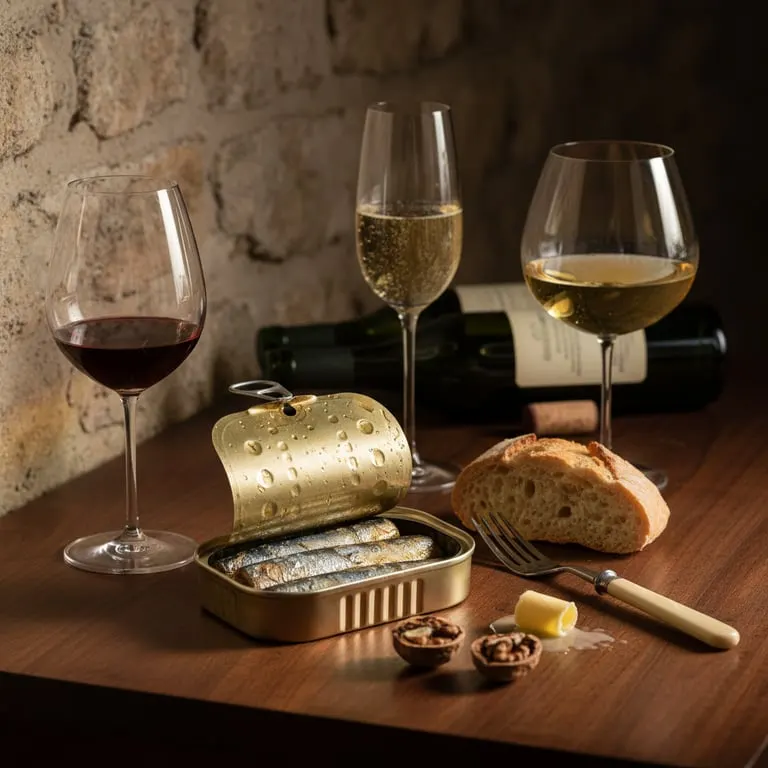
The classic advice is simple: sardines want a crisp, dry white. It is good advice, and for a young tin it is hard to improve on. But a vintage sardine changes over the years, and the wine that suits it can change too. This guide covers the classics, the alternatives, and what to avoid.
The classic: crisp, dry and coastal
Oily fish and tart wine are an old partnership. The acidity cuts through the oil, refreshes the mouth and makes you want another bite. Sardines from the Atlantic coast have a natural partner nearby: Muscadet, from the vineyards around Nantes, near the mouth of the Loire. Muscadet sur lie, aged on its lees, adds a little texture and a faint salty, bready note that suits tinned fish very well.
David Lebovitz, writing about Rödel sardines on his site, suggests a bottle of Chablis or a bracingly dry white with them, and adds that hard cider or a cold beer would be welcome too. That is a fine summary of the classic approach.
We go deeper into this pairing in Muscadet and vintage sardines.
What changes with age
A young vintage sardine is firm, bright and briny. After several years in olive oil, it is softer, the bones are tender, and the flavour has grown rounder and longer. The oil itself has taken on the taste of the fish.
That change opens the door to wines with a little more body and texture. Very sharp, very light whites still work, but they can feel thin beside an older tin. A wine with some roundness meets the softer fish halfway.
Whites for older tins
- Dry Chenin Blanc from the Loire (Savennières, Anjou, dry Vouvray or Montlouis). Firm acidity with notes of apple, quince and honey, and enough texture for a soft, oily fish.
- Chablis, especially with a little age. Mineral, precise, with a gentle roundness.
- Dry Riesling from Alsace or elsewhere. Lively acidity and fruit that stands up to an older tin.
- Albariño from Galicia or Alvarinho from northern Portugal. Fresh, slightly salty, made on the same Atlantic coast as many sardines.
- Savagnin from the Jura, in its topped-up, non-oxidative style, for the adventurous. Its nutty, saline character can be a striking match, though not to everyone's taste.
Reds, if you like them
Red wine with sardines is possible, with care. Firm tannins and oily fish can produce a metallic taste, so the rule is light and fresh:
- Gamay from the Loire or a light Beaujolais, served cool.
- Light Pinot Noir, from Alsace or the Loire, served cool.
Avoid big, oaky, tannic reds. They overwhelm the fish and clash with the oil.
Bubbles, cider and beer
- Crémant de Loire or another dry crémant: fresh, fine and affordable.
- Champagne blanc de blancs: lively and clean, a lovely match for an older, richer tin.
- Dry Breton cider (cidre brut): the obvious regional choice, with apple acidity and a little bitterness.
- Cold beer: a crisp lager or a light, dry farmhouse ale.
What to avoid
- Heavy oak, which fights the delicate taste of the fish.
- High alcohol, which makes oily food feel heavy.
- Firm tannins, for the metallic effect described above.
- Sweet wines, unless you are deliberately playing with a sweet and salty contrast.
A quick guide by tin
| Tin | Suggested glass |
|---|---|
| Young vintage in olive oil (one or two years) | Muscadet sur lie, Chablis, dry cider |
| Older vintage (four years and more) | Dry Chenin, aged Chablis, blanc de blancs Champagne, Savagnin |
| Recipe tin with lemon or chilli | Dry Riesling, Albariño, cold beer |
| Recipe tin with tomato or herbs | Light Gamay served cool, dry rosé |
| Sardines warmed in butter | Dry Chenin, crémant |
Serving tips
Serve the sardines at room temperature, so the oil is fluid and fragrant. Serve whites cool, not icy; very cold wine tastes of little. Put out good bread and, if you like, salted butter: it helps both the fish and the wine. And open two wines if you can. Comparing them with the same tin teaches more than any guide.
No pairing is a rule. The best match is the one you enjoy, and a tasting with friends, with two or three tins and two or three bottles, is the most pleasant way to find it.
For other directions, read our pieces on natural wine with vintage sardines and on pairing vintage sardines with aged cheese.
From the collection
Gilbert Shelton · 10 tins · Shelf I
Chiporev · 2 tins · Shelf I
Marianne Larvol · 5 tins · Shelf I